
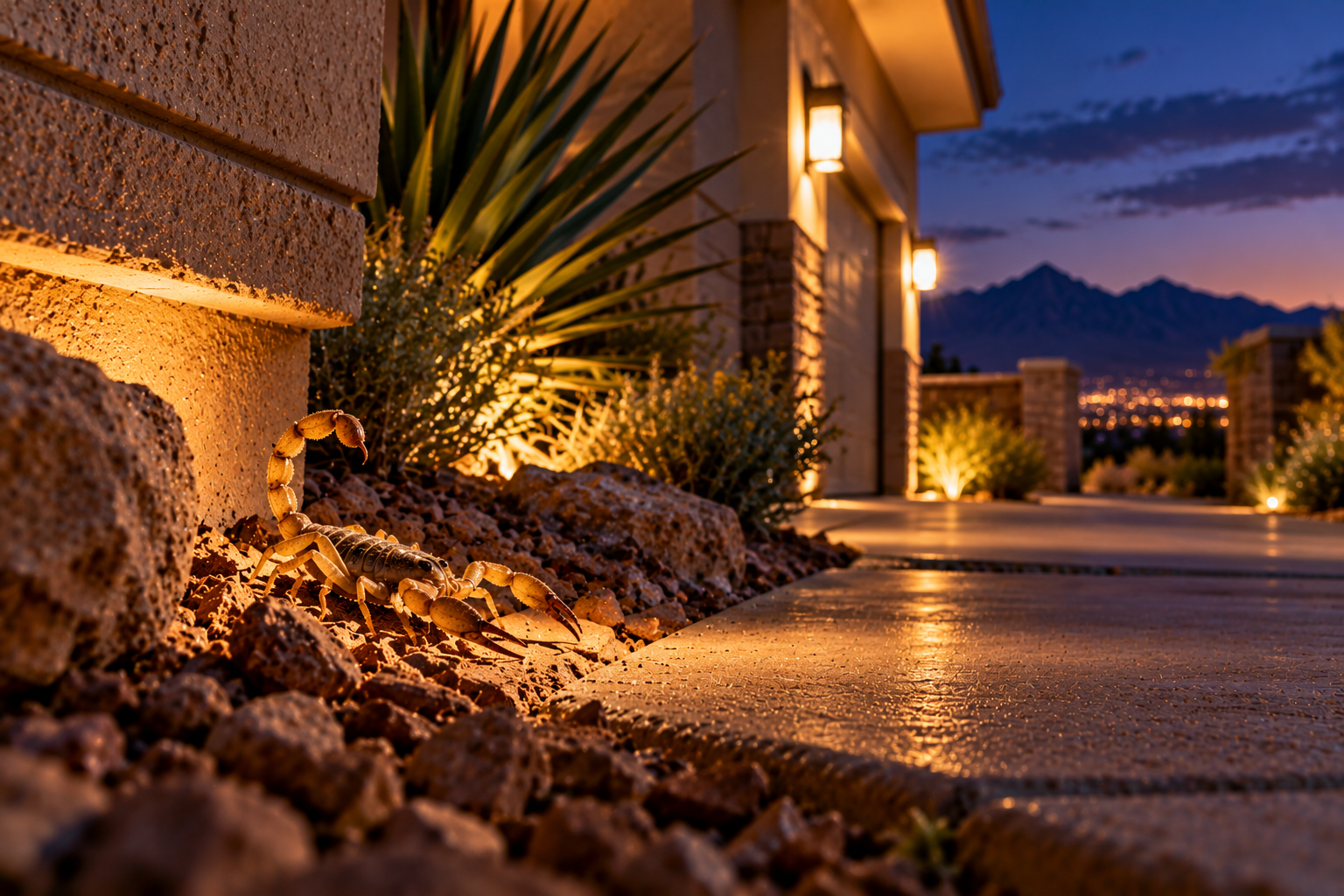
Las Vegas may stay warm during the day well into fall, but cooler nights can change where scorpions travel and hide. These desert pests are highly adapted to heat, yet they still seek protected spaces when temperatures fluctuate. Garages, block walls, patios, landscaping, utility gaps, bathrooms, and storage areas can all offer the shelter and stability scorpions need after sunset.
Our team approaches scorpion control by looking at more than the scorpion that was seen. Shelter, insect prey, moisture, structural gaps, and nearby landscaping all influence whether activity continues around a home. As nights become cooler, understanding those conditions helps us determine whether sightings are occasional or part of a recurring pattern that needs professional attention.
Cooler Nights Can Push Scorpions Toward Stable Shelter
Scorpions spend much of the day hidden in shaded, low-disturbance areas and become more active at night. As temperatures cool, the spaces around a home can provide more stable conditions than exposed desert ground. Block-wall voids, rock beds, garage corners, cracks, and sheltered patios can continue supporting activity even after peak summer heat fades.
Our guide to late-season scorpion activity explains why cooler weather does not automatically end the problem. Many of the same hiding places used during summer remain useful well into fall.
Common shelter areas include:
- Block walls with dark internal voids
- Rock beds and debris near foundations
- Garages with boxes or low-traffic storage
- Cracks around patios, walls, and utility lines
- Shaded areas near irrigation or plumbing
- Bathrooms, laundry rooms, and closets with moisture
These spaces can keep scorpions close to the structure even when outdoor conditions become less extreme.
Prey Insects Give Scorpions A Reason To Stay Nearby
Scorpions are predators, so their presence often reflects the availability of other pests. Cockroaches, crickets, ants, spiders, and other small insects can remain active around exterior lights, irrigated landscaping, garages, wall gaps, and damp areas. If prey is plentiful, scorpions have a dependable reason to stay near the home.
Our technicians therefore evaluate both scorpion activity and the broader pest environment. Treating only the visible scorpion may reduce one immediate concern without addressing the food source that keeps pressure high.
Important factors can include:
- Exterior lights that attract insects near doors
- Irrigation that creates localized moisture
- Dense vegetation or clutter that shelters prey
- Trash or organic debris near exterior walls
- Garage storage that creates hidden insect activity
- Cracks and wall voids used by multiple pests
Reducing prey pressure can make the property less attractive over time and support better long-term scorpion control.
Entry Points And Professional Follow-Up Matter As Seasons Shift
Cooler nights can also make structural access more important. Scorpions can flatten their bodies and move through narrow openings around doors, vents, windows, utility penetrations, and garage edges. Rough stucco, brick, and block walls also provide surfaces they can climb while searching for shelter or prey.
Our article on professional pest control explains why accurate identification, targeted treatment, and follow-up can reduce repeat problems more effectively than reacting to each new sighting separately.
A professional scorpion-control plan may include:
- Inspecting block walls, rock beds, garages, and foundation edges
- Checking door sweeps, vents, windows, and utility penetrations
- Identifying prey insects that may be supporting scorpion activity
- Applying treatment to confirmed resting and travel areas
- Monitoring new sightings after seasonal temperature changes
- Adjusting service when activity shifts to another part of the property
Follow-up matters because scorpion pressure can change from one part of the property to another. A quiet area after treatment does not necessarily mean all activity has ended, especially when nearby landscaping, shared walls, desert lots, or irrigation continue supporting shelter and prey.
Professional inspection also helps distinguish an isolated indoor encounter from a larger exterior issue. One scorpion in a bathroom may have entered through a small structural opening, while repeated sightings in a garage may point to nearby block-wall voids, storage, or insect activity. Those situations require different priorities.
Seasonal cooling should therefore be viewed as a shift in behavior rather than the end of scorpion season. Las Vegas can remain warm enough for activity well into fall, and protected areas around homes may become increasingly useful as nighttime temperatures drop.
The strongest long-term approach connects shelter, prey, access, and monitoring. Our team uses those factors together to determine where activity is concentrated and which parts of the property need attention. That keeps scorpion control focused on the conditions driving the problem instead of relying on one-time reactions to visible pests.
It also creates a useful seasonal baseline. By comparing where sightings occur, what prey is present, and which structural gaps remain active, our technicians can identify recurring pressure more accurately and refine the plan before another period of increased scorpion activity develops.
Keep Cooler Nights From Bringing Scorpions Closer
If scorpions keep appearing around your garage, patio, walls, or indoor spaces as nights cool, contact Preventive Pest Control for professional scorpion control focused on inspection, targeted treatment, prey reduction, entry-point evaluation, and long-term monitoring.