
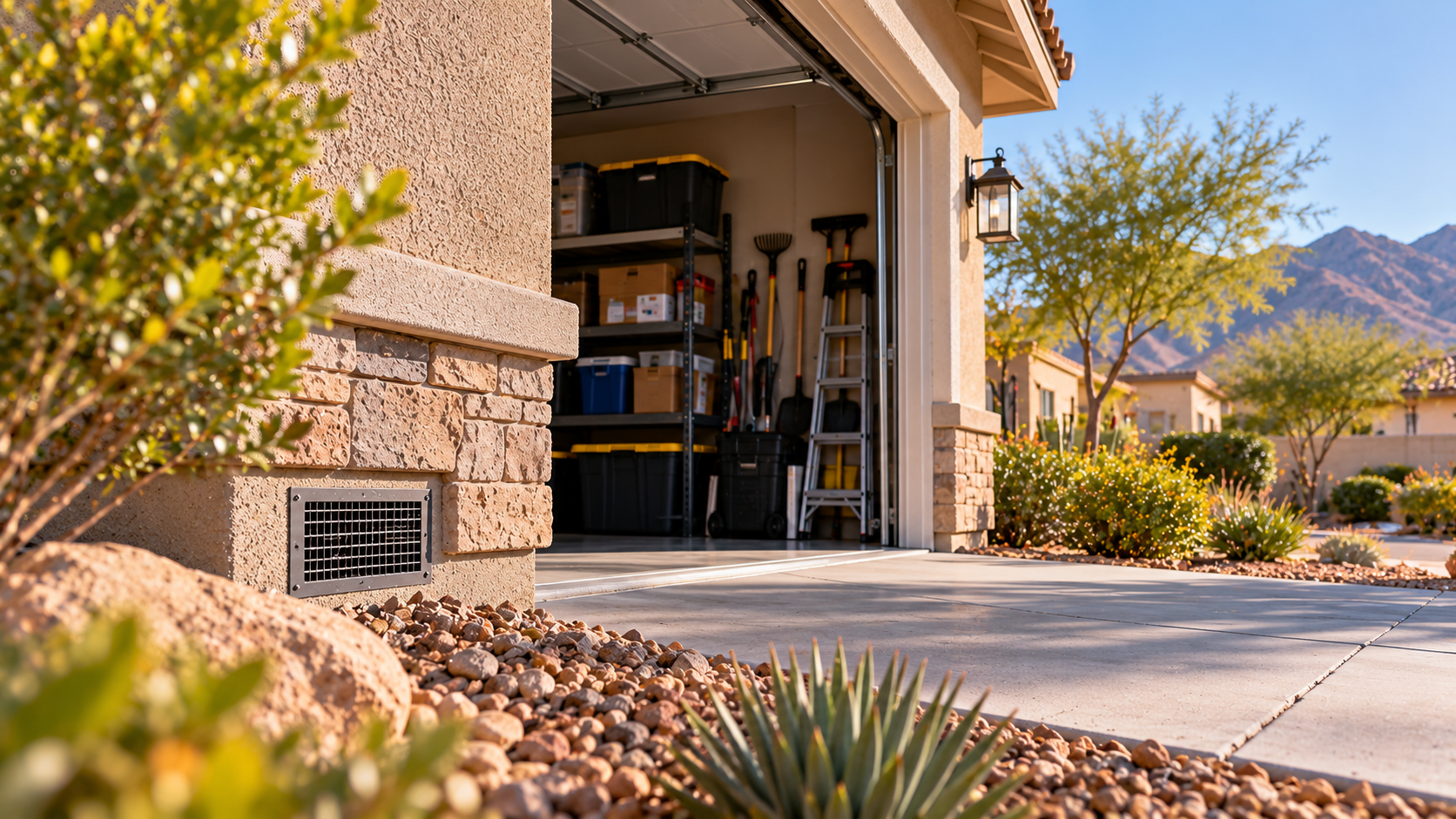
In Las Vegas, winter rarely brings prolonged freezing weather, but cooler nights can change how rats and mice use residential properties. A garage that stays quiet in summer may become a convenient shelter when outdoor food is less reliable. Attics, storage rooms, and wall voids provide additional cover, sometimes allowing activity to develop before anyone notices an animal.
Rodent control before winter is valuable because the first visible sign rarely explains the entire problem. Our technicians look at movement routes, food sources, nesting material, and vulnerable construction details together. Understanding those connections makes it easier to identify a current infestation and reduce opportunities for repeated entry.
Small Openings Can Become Major Winter Access Routes
Rodents do not need an open door to find their way indoors. A damaged garage seal, space beside a utility pipe, or exposed roofline junction may provide enough access. Some routes are difficult to notice from ground level, especially when landscaping, stored belongings, or exterior equipment blocks the view.
Important inspection locations include:
- Garage thresholds: Gaps beneath doors may connect outdoor travel routes with stored belongings and sheltered interior areas.
- Roof edges: Damaged soffits, vents, and intersections can provide access to attic spaces.
- Utility penetrations: Openings around pipes, cables, and mechanical equipment may lead toward concealed wall cavities.
- Exterior storage: Stacked boxes and seldom-moved materials can hide entry evidence or nesting activity.
- Foundation transitions: Cracks and gaps around building materials deserve evaluation when droppings or gnaw marks appear nearby.
The size of a gap matters, but so does evidence that rodents are using it. Fresh droppings, greasy rub marks, disturbed insulation, and scratching sounds help technicians prioritize their investigation. Our article on seasonal rodent movement explains why changing weather can make these existing vulnerabilities more important.
Exclusion should be coordinated with an assessment of animals already inside. Closing a suspected opening prematurely may leave rodents trapped within the structure, while sealing only the most obvious gap can miss another established route.
Hidden Rodent Activity Can Affect More Than Stored Food
Rats and mice can remain out of sight for long periods, especially in spaces that people seldom enter. During that time, they may gnaw packaging, contaminate stored items, or damage insulation. Their need to chew can also affect wiring and other building materials, although the extent of harm varies considerably between properties.
Several warning signs warrant closer examination:
- Droppings: Small deposits along walls or near stored items can indicate regular movement through an area.
- Gnawing: Fresh marks on packaging, wood, or other materials may reveal feeding or access behavior.
- Nesting debris: Shredded paper, fabric, or insulation can suggest protected resting locations.
- Nighttime noises: Scratching or movement in ceilings and walls may justify an inspection, although sounds alone are inconclusive.
- Unusual odors: Persistent smells in enclosed spaces can accompany activity and require careful identification.
These signs do not establish the number of rodents present. Older evidence may remain after an earlier problem, and other animals can produce similar sounds. A trained inspection distinguishes current activity from historical damage and identifies any structural repair or contamination concerns that require separate attention.
Early intervention is not simply about removing the animals that can be seen. It is about understanding whether the property’s conditions could support additional rodents as the season progresses.
Inspection and Follow-Up Make Prevention More Dependable
A one-time response may resolve a limited incident, but established rodent activity often calls for a connected sequence of assessment, control, exclusion, and monitoring. The appropriate approach depends on the species, extent of activity, access conditions, and household safety considerations.
A property-specific plan may include:
- Initial inspection: Mapping droppings, damage, nesting clues, and likely travel routes establishes a reliable baseline.
- Targeted control: Professional trapping or baiting may be selected according to the infestation and property conditions.
- Secure placement: Tamper-resistant bait stations may be used when appropriate to limit unintended access.
- Exclusion recommendations: Identified openings can be addressed in a sequence that accounts for active rodents inside.
- Follow-up checks: Later observations help determine whether evidence has declined or additional routes remain active.
Our discussion of preventive pest treatments explains how targeted intervention and ongoing monitoring can complement seasonal inspections. For rodents, that continuity is especially useful when new activity appears around a different garage corner or roofline after earlier control measures.
No inspection or exclusion project can guarantee that wildlife will never approach a home. Nevertheless, documenting findings and correcting confirmed vulnerabilities provides a more practical basis for winter protection than reacting only after another sighting. Homeowners also gain clearer information about what has been addressed and which conditions deserve further attention.
Protect Your Home Before the Next Scratching Sound
If you have noticed rodent signs or want vulnerable areas checked before winter, contact Preventive Pest Control for a professional assessment. Our team can identify activity, explain appropriate control options, and recommend follow-up suited to your Las Vegas home.