
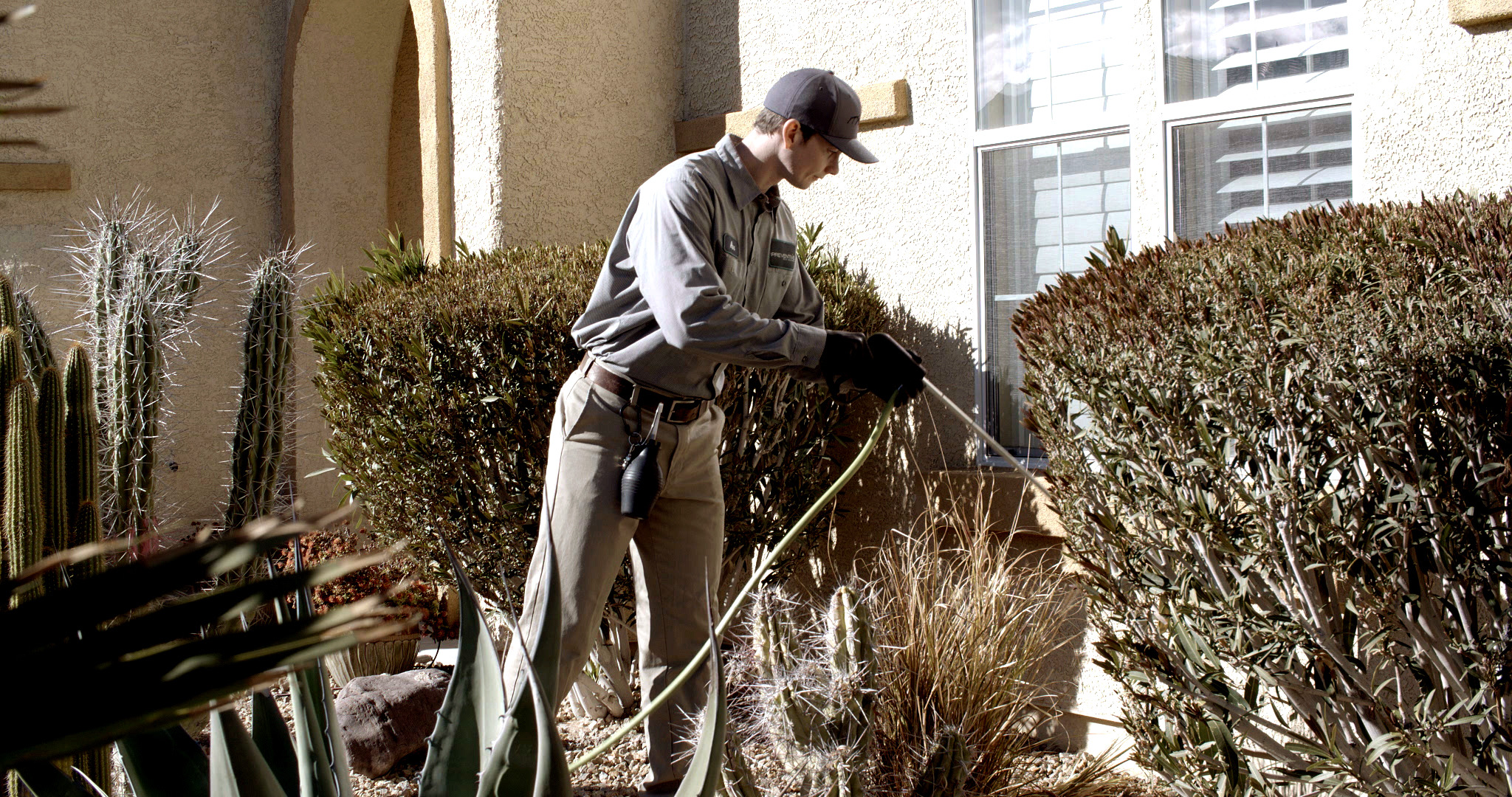
Heat, dry soil, sudden irrigation, shaded patios, and small structural openings can bring ants, rodents, termites, pigeons, spiders, scorpions, bed bugs, mosquitoes, cockroaches, and even weeds closer to the property. Peak pest season is not only about more insects outside. It is about pests searching for water, cooler shelter, nesting areas, and steady food sources.
A home may look quiet in early spring, yet pests can already be moving through wall gaps, garage edges, rooflines, landscape beds, and outdoor storage areas. The goal is to reduce conditions that invite pests in while giving professionals a clearer view of early activity.

Start outside before the activity rises
The exterior is the first line of defense during pest season. In Las Vegas, patios, block walls, garages, roof edges, trash areas, and desert landscaping can create sheltered routes for pests. Ants may trail along foundations. Scorpions and spiders may hide under stored items. Rodents can explore gaps near doors, vents, and utility lines. Pigeons may return to rooflines, solar-panel edges, and shaded ledges.
A clean, visible perimeter helps inspections become more accurate. For seasonal context, this resource on spring pests explains why early preparation matters before warm-weather activity grows.
- Trim: Cut back shrubs, branches, and plant growth that touch walls, windows, rooflines, or utility areas.
- Clear: Move boxes, wood, unused pots, and stacked materials away from the foundation and garage.
- Drain: Remove standing water from containers, drains, toys, saucers, and low spots after irrigation or rain.
- Watch: Look for droppings, nesting material, webbing, ant trails, mud tubes, or pigeon buildup.
Seal the small openings pests use
Many pest issues begin with openings that seem too small to matter. Rodents can use narrow gaps. Cockroaches and ants can move through cracks around doors, pipes, and baseboards. Scorpions and spiders often follow dark, protected routes around garages, thresholds, and wall edges. Mosquitoes may not need entry gaps to breed, but open doors and damaged screens make indoor bites more likely.
Sealing and maintenance should be practical, not rushed. Door sweeps, weather-stripping, screen repair, vent covers, garage-door gaps, and utility penetrations all deserve attention. These steps support professional service by reducing easy access points.
Make indoor spaces less inviting
Inside the home, pests respond to food, moisture, clutter, warmth, and hiding places. Kitchens, bathrooms, laundry rooms, pantries, closets, and garages often carry the most clues. Cockroaches may stay near moisture and food residue. Ants may follow crumbs or spills. Bed bugs require a different inspection approach because they hide in tight resting spaces. Rodents may leave droppings, gnaw marks, or rubbing marks near stored items.
- Store: Keep pantry goods, pet food, and dry staples in sealed containers with tight-fitting lids.
- Clean: Wipe spills, crumbs, grease, and sticky residue from counters, floors, cabinets, and appliance edges.
- Reduce: Limit clutter in garages, closets, laundry rooms, and storage areas where pests can hide.
- Report: Note recurring sightings by room, time of day, and location so service can be more targeted.
These habits help make pest activity easier to trace. They also keep treatments focused on the actual source instead of scattered symptoms.
Inspect early signs before summer pressure
Summer can intensify pest activity in Las Vegas. Mosquitoes may become more noticeable around water sources. Cockroaches may move indoors when outdoor conditions shift. Rodents may search for cooler shelter. Scorpions, spiders, ants, termites, pigeons, bed bugs, and weeds can all become harder to manage if early signs are missed.
Professional inspection is valuable because different pests require different responses. Termite activity needs careful structural evaluation. Rodent pressure may require entry-point review and trapping. Pigeon control looks at nesting, roosting, and exclusion. Scorpion and spider control often depends on harborage reduction and perimeter attention. A helpful guide on summer pest problems shows why warm-season activity deserves early attention.
- Termites: Watch for mud tubes, damaged wood, discarded wings, or unexplained surface changes.
- Rodents: Listen for scratching, check droppings, and inspect garage corners, attics, and utility openings.
- Pigeons: Look for droppings, nesting debris, feathers, and repeated roofline activity.
- Scorpions: Check garages, block walls, stored items, and dark outdoor edges with caution.
Build a long-term prevention rhythm
Peak pest season preparation works best as a routine, not a one-time rush. A well-prepared home still needs seasonal review because pest behavior changes with weather, irrigation, nearby construction, landscaping, and household activity. Regular service helps connect the small signs: ants near the kitchen, pigeons on the roof, scorpions near the garage, weeds returning along hardscape, or rodent evidence near storage.
This steady rhythm also helps service recommendations stay practical, because each visit builds on what was observed during the last one.
That balance keeps pest control measured, efficient, and better suited to the property’s real conditions.
Keep Your Home Ready Before Pests Move In
For reliable help with household pests, desert pest concerns, termite protection, pigeon issues, and weed control, contact Preventive Pest Control for professional local support.