
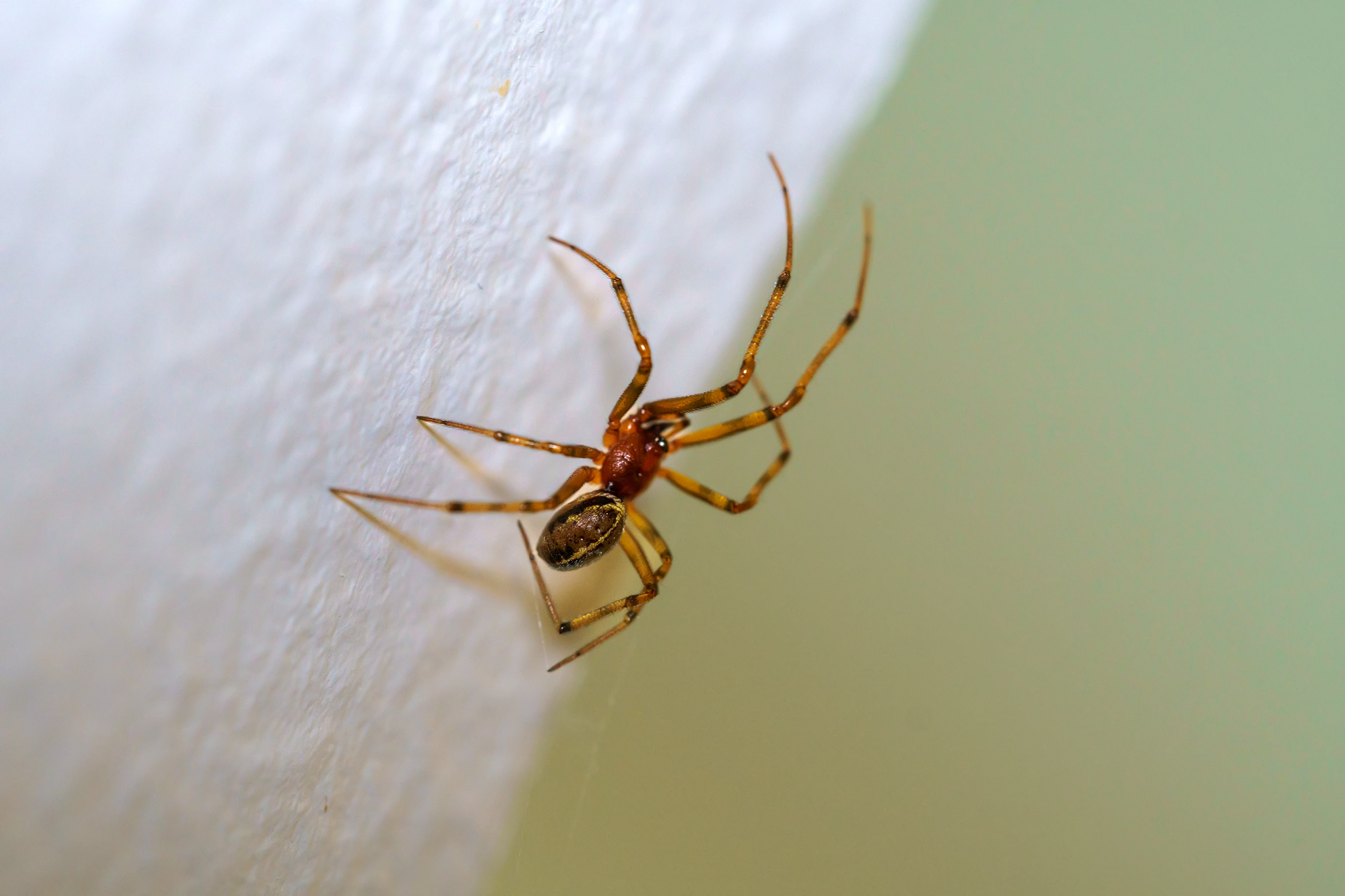
Las Vegas homes provide spiders with many of the conditions they need to stay hidden: warmth, shelter, quiet corners, and access to insect prey.
Effective spider control starts by identifying where activity is building and why those locations are attractive. Garages, storage rooms, patios, ceiling corners, and entry points are especially important because they combine shelter with access to insects. Repeated activity in one area often suggests that both shelter and prey are available nearby, making inspection of surrounding spaces just as important as checking the visible web itself.

Garages And Storage Areas Offer Quiet Shelter
Garages are among the most common spider hiding spots in Las Vegas homes. They tend to have lower foot traffic than living areas, and stored items create dark, protected spaces where spiders can remain undisturbed.
Common hiding areas include:
- Cardboard boxes stacked along walls
- Shelving with rarely moved household items
- Corners behind tools, cabinets, or storage bins
- Gaps around garage doors and weather stripping
- Ceiling edges where webs are left undisturbed
- Areas near exterior lights that attract insects
Professional service looks beyond visible webs. Guidance on professional pest control explains why identification, inspection, and targeted treatment are more efficient than repeatedly addressing only what can be seen. This is particularly important when several spider hiding places are connected by the same insect activity or structural access route. Checking adjacent spaces can reveal whether activity is isolated or part of a wider pattern inside the property.
Closets, Cabinets, And Ceiling Corners Can Hide Activity
Indoor spiders often prefer spaces where people rarely disturb them. Closets, utility rooms, cabinets, ceiling corners, and areas behind furniture can provide stable shelter for extended periods.
Spiders may also settle near small wall gaps, utility penetrations, vents, or other access points connecting interior rooms with hidden structural spaces.
The right response depends on the species, location, and conditions supporting activity. Simply removing a web may improve appearance, but it does not necessarily address the spider, egg sacs, or insect prey nearby.
Patios, Eaves, And Exterior Lighting Attract Spiders
Many indoor spider problems begin just outside the home. Covered patios, eaves, exterior corners, and light fixtures can attract insects at night, creating reliable feeding areas for spiders.
High-risk exterior areas include:
- Porch and patio ceiling corners
- Eaves protected from direct sun and rain
- Exterior light fixtures with heavy insect activity
- Furniture stored against walls
- Dense plants touching the structure
- Door and window frames with small gaps
Reducing prey pressure and inspecting access routes can make spider control more effective. Exterior activity deserves attention because spiders that remain close to doors, vents, or garage openings have more opportunities to move indoors. Patio furniture, grills, storage cabinets, and decorative features can also create shaded pockets that stay undisturbed through much of the day.
Preventive Treatment Helps Stop Activity From Rebuilding
Spider problems often return when the surrounding conditions remain unchanged. A clean-looking room can still have entry gaps, insect prey, or hidden spaces that allow new activity to develop.
The value of preventive treatments is that they focus on inspection, targeted exterior defense, monitoring, and seasonal adjustments. In Las Vegas, heat, irrigation, shaded areas, and structural shelter can change where pests concentrate throughout the year.
Professional spider control may include inspecting common hiding zones, removing active web buildup, treating areas where spiders rest, and addressing the insects attracting them. Technicians can also identify whether activity is shifting between patios, garages, storage spaces, or interior rooms.
Long-Term Spider Control Starts With The Whole Property
A lasting plan should consider both indoor hiding spots and the exterior conditions feeding activity around the home. Spiders are predators, so recurring webs often point to a broader supply of insects, shelter, or access.
A complete strategy may include:
- Inspecting dark corners, storage areas, garages, and patios
- Checking webs and egg sacs for patterns of recurring activity
- Reducing insect prey around lights and exterior gathering areas
- Sealing confirmed gaps around doors, vents, and utility openings
- Treating active spider zones based on inspection findings
- Scheduling follow-up when webs or sightings return
Professional monitoring is especially valuable in Las Vegas because seasonal heat and irrigation can shift pest pressure quickly. Areas that are quiet during one visit may become active later as insects move toward water, shade, or indoor shelter.
The goal is not just to remove the spider that happens to be visible. Effective spider control targets the hiding areas, prey sources, and access routes that allow activity to rebuild. When those factors are addressed together, recurring webs become easier to manage, and the treatment stays focused on the parts of the property that actually need attention. A documented pattern of where webs return can also help technicians decide which areas deserve closer follow-up during future service visits.
Clear Out The Places Spiders Keep Returning To
If webs or spider sightings keep returning around your home, contact Preventive Pest Control for professional spider control focused on inspection, targeted treatment, prevention, and follow-up.